October 31, 2025 · QCORE Webinar Series
Length: 1h 19m 04s
Why We Hosted This Talk
At QCORE, we care about more than just the math of quantum mechanics. We care about what it means for how we think about reality, evidence, and objectivity.
That’s why we sat down with Gordon “Corky” Brittan, a longtime colleague and philosopher of science, to ask a tricky question:
Does quantum mechanics make science subjective—or can we still talk about an objective world?
In this session, Corky shares why defending objectivity in science has become one of his “late-life missions,” especially as public confidence in science wavers.
About the Speaker
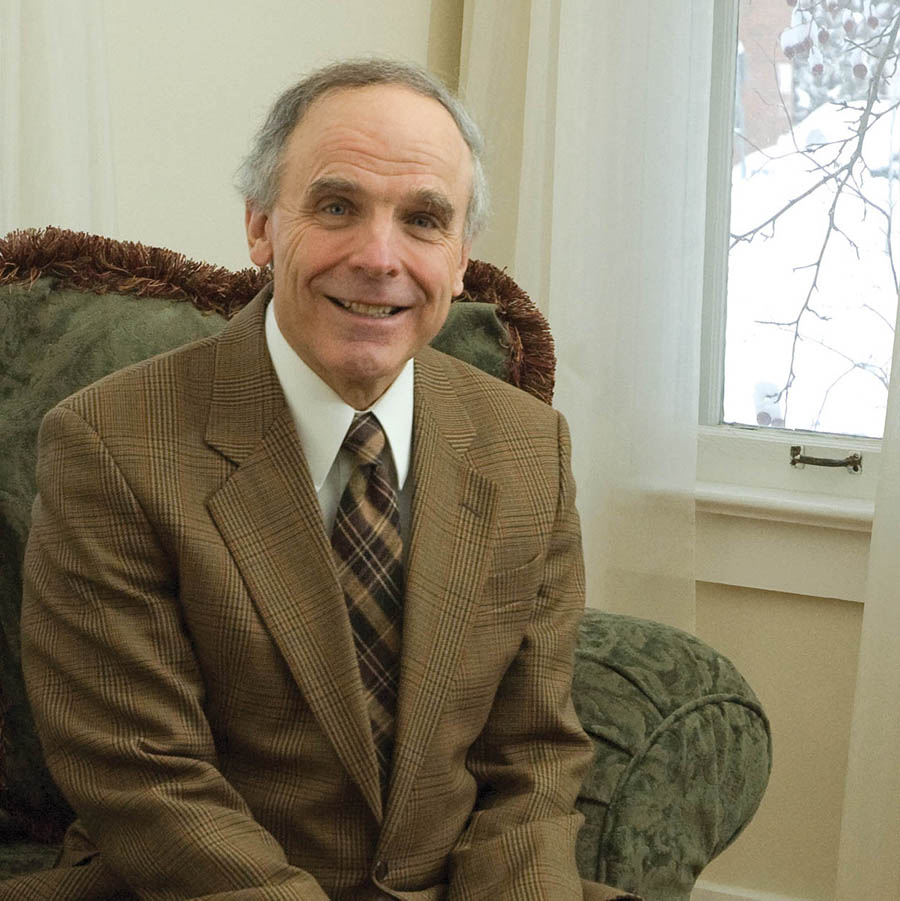
- Corky earned his Ph.D. in philosophy from Stanford University in 1966, working under Donald Davidson, one of the 20th century’s most influential philosophers.
- After receiving multiple job offers, he asked Davidson where to go. The answer:
“Go to the University of California, Irvine—that will serve you well.” - Corky joined UC Irvine, published his first book, Introduction to the Philosophy of Science, and earned tenure in 1973.
- Around that time, he and his wife, Vanessa, visited Montana, fell in love with the mountains, and joined Montana State University (MSU). He earned tenure again at MSU in 1976 and published his classic work, Kant’s Theory of Science, with Princeton University Press in 1978.
- Although he formally retired in 2008, Corky never stopped writing. He has published multiple papers, co-authored a book with Springer (2016), and is now working on a book about Qbism/Cubism and quantum mechanics.
Throughout his career, Corky has been known for his support of students, colleagues, and the broader university community.
Corky’s Mission: Objectivity in a Quantum World
He opened by sharing his goal for the talk:
- To give a broader perspective on quantum mechanics than many people commonly encounter
- To make a case for the objectivity of science at a time when public confidence is declining
He described this as one of his late-life missions, alongside ongoing work in renewable energy.
Corky credited colleagues like Professor Badrin and Professor Tape, and a former student, Peter, who double-majored in physics and philosophy at MSU, later completed a master’s in physics and a Ph.D. under physicist Bill Kitchen, and went on to a strong career.
Why Philosophers Enter Quantum Physics
Corky framed his remarks as a critique of David Mermin, a distinguished physicist at Cornell University and a leading advocate of Qbism (Quantum Bayesianism).
His goal was not just to say “Mermin is wrong” but to show:
How philosophers engage with physics, especially when physicists make philosophical claims.
Mermin is not proposing a new physical theory. Instead, he offers an interpretation of quantum mechanics. Corky’s point:
- You probably won’t walk away with new equations or new physics facts.
- You will walk away with a better sense of how philosophers think about physics, and that kind of engagement has been going on since ancient Greece (Democritus / early atomists).
From the beginning, the central philosophical question has been:
How does everything fit together into a unified world?
That’s metaphysics: figuring out how all aspects of reality connect.
Philosophers also work on normative questions: What should count as a scientific theory, a valid experiment, or sound evidence, so that scientific results can genuinely be called objective?
Two Images of the World
A core issue for Corky is the tension between two “images” of reality:
- The scientific image of the world
- The manifest (everyday) image—how the world appears through ordinary experience
Key question: Which image is fundamental—or can they be reconciled? This tension sits at the heart of debates about how to interpret quantum mechanics.
How Quantum Mechanics Breaks Classical Intuition
Quantum mechanics, Corky argues, challenges common sense in several striking ways:
1 The Law of Excluded Middle Wobbles
Traditionally, we’re told: a statement is either true or false—no middle ground.
Quantum mechanics suggests something stranger: before measurement, a system may be in a state that is neither fully one nor the other, and in some ways both.
| Enter Schrödinger’s cat:A cat is sealed in a box with a radioactive trigger.If the atom decays, the cat dies. If not, it lives.Before we open the box, the cat is described as being in a superposition of “alive” and “dead.” This is deeply uncomfortable to everyday intuition. |
2 Objects Don’t Stay Nicely Localized
In everyday life, we deal with particular things: this person here, that chair there, this coffee cup on the table. They seem localized and persistent. In quantum mechanics, entities can be spread out over space, in some sense “in two places at once.”
3 Observation Affects What Becomes Real
Quantum mechanics tells us that a system may be fully described mathematically and yet change simply because we measure it.
The act of observation is not passive—it actively contributes to what becomes real. That’s a significant departure from classical mechanics, which assumed a fully determined reality independent of us.
What Is QBism?
Corky then turned to the interpretation he critiques: QBism, as defended by David Mermin.
In QBism:
- All probabilities in quantum mechanics are treated as personal degrees of belief.
- Measurement outcomes are seen as experiences of the observer, not as direct revelations of properties of an external world.
- Each person has “my world” and “your world,” and a shared world is built by negotiating and aligning these experiences through language and agreement.
On this view:
- A measurement result is not something “out there.
- It is an experience happening to me.
Science, accordingly, becomes a conversation among observers about their private experiences.
Corky recognizes that this emphasis on experience has roots going back at least to Kant, but he does not think the argument ultimately works.
Why This Matters
If we follow QBism all the way through:
- The laws of science become about how we update beliefs.
- The “world” we talk about is not directly the external world but a shared narrative we construct between us.
- Physical objects become secondary to experience.
For Corky, this creates a serious danger: If everything reduces to personal experience, what protects scientific objectivity?
Science, he insists, depends on a world we all investigate, not separate private worlds we negotiate after the fact.
Corky’s Core Critique: Experience Isn’t Enough
Mermin wants to say: “Measurements are experiences.” That’s his primary move.
Corky’s reply:
- Experiences are fleeting, private, and tied to one subject.
- Science requires:
- Shareable data
- Evidence that persists
- Objects multiple people can investigate
If all we have are experiences, they evaporate as soon as they arrive. There’s nothing stable to build a scientific picture on.
Objects vs. Experiences
Corky emphasizes the role of language:
We speak in terms of objects:
- “That electron”
- “This detector”
- “The cat in the experiment”
Language presupposes persistent elements of reality. We do not build a world out of fleeting experiences. We locate ourselves among objects that endure.
As Corky puts it: We don’t define objects by thought. Instead, we define ourselves by our location among objects.
Determinism in Quantum Description
Quantum mechanics contains both deterministic and probabilistic elements:
- The wave function evolves deterministically via Schrödinger’s equation.
- Measurement introduces probabilistic outcomes (indeterminacy).
This split, Corky says, tells us something important:
The world itself must have deterministic aspects—otherwise the deterministic equations would have no grounding.
There is something real beneath the probabilities. Measurement does not simply manifest a private experience; it interacts with a system that already has properties.
Why Objectivity Still Matters
If science becomes only: “What I experience and what you experience,” then:
- There is no stable world on which to build evidence.
- Objectivity collapses into social agreement.
- Credibility becomes a vote, not a discovery.
In a moment where public trust in science is fragile, Corky argues, this is unacceptable. He reminds us that we’ve been here before, for example, Copernicus moving Earth from the center, and Newton introducing universal gravitation.
These revolutions shattered the “manifest image” of the world. Today, quantum mechanics is doing it again. But the correct response is not to give up on an objective world. It’s to deepen our understanding of it.
Evidence, Experience, and the Self
For Corky, evidence must:
- Be independent of who gathers it
- Persist over time
- Provide a standard we can all refer to
Experiences are real, but momentary and personal, and not publicly inspectable “as experiences.”
If experiences become the unit of science, we lose the ability to correct each other and to discover things that surprise us. Science depends on the possibility that the world can disagree with us. That disagreement is not just about our inner experience; it’s about what exists out there.
He also argues that subjects (observers like us) emerge because there is already a structured world:
- We perceive lasting objects.
- We learn our place:
- This is my location
- That is your location
- Objects stand between us and define the space we share.
If we start with isolated experiencers, we can’t recover a structured, shared world.
Does Quantum Mechanics Kill Reality?
Some defenders of Qbism say: “Quantum mechanics removes realism. There are no intrinsic properties until measured.”
Corky disagrees. He sees a crucial distinction:
- The wave function evolves deterministically.
- Measurement introduces indeterminacy.
So at least part of physics is describing something real—something that exists before we look. If that weren’t true, the mathematics would be unanchored, floating free of any world.
Corky’s view is that there is a reality independent of measurement. Measurement affects it—but does not create it.
The Stakes: Truth vs. Consensus
If Mermin is right and there is no constraint from an external world, then physics becomes a negotiated consensus, and anything we agree on can become “true.”
Corky’s verdict: That is not science. That is politics.
Science, he argues, needs something stubborn— something that doesn’t care what we believe. A world that can prove us wrong. If we give that up, we abandon objectivity.
Q&A Highlights
Q1. Are you saying that quantum mechanics is still fundamentally describing an objective reality, even if measurement changes it?
Corky:
Yes, absolutely.
The world does not begin when we measure it. Measurement is an interaction with something that was already there. If there is no object, there can be no measurement.
There must be something with which our instruments engage—something that pushes back.
So my argument is:
- Quantum formalism describes real elements of the world.
- We alter those elements when we measure.
- But that does not reduce the world to personal experience.
That’s the key difference between an objective world we investigate and a private world we merely report.
Q2. How do you reconcile the nonlocal aspects of quantum entanglement with your argument for a structured world?
Corky:
Entanglement is remarkable. It shows that parts of the world can be connected in ways that are not spatially local. But that doesn’t mean there is no structure. It means the structure is deeper than classical space.
Quantum mechanics forces us to expand the definition of what counts as structure. It does not eliminate it.
Entanglement does not destroy objectivity. It expands our conception of it.
Q3. If the world has a structure before we observe it, how do you interpret the fact that measurement outcomes in quantum mechanics are not fixed ahead of time?
Corky:
Quantum mechanics is unique because:
- Some properties are not determined until measured.
- Yet the framework that enables those outcomes is determined in advance.
So I would put it this way: Quantum mechanics doesn’t deny structure—it tells us structure has layers. There is a deterministic layer: the wave function, and an indeterministic layer: measurement. Both are needed.
If measurement made the world from nothing, there would be no basis for:
- Prediction
- Evolving equations
- Building technology
But we do build technologies from quantum mechanics: lasers, MRI, and semiconductor electronics. Those successes show that the theory connects to the real world.
Q4. If evidence needs to be public, what do we say about cases where two observers truly can’t agree on what they saw? Quantum mechanics sometimes gives that impression.
Corky:
Yes, and that impression has fueled interpretations like Qbism. But we should resist that conclusion.
Here’s the key distinction:
- Private experiences may differ.
- Physical records do not.
Scientific measurement produces traces: A click in a detector, a spot on a photographic plate, a number on an instrument screen
Those traces persist and can be checked by anyone with the right tools. If two observers disagree, we go back to the trace; that’s what settles the dispute.
Q5. But the trace itself is a physical interaction. Isn’t that still “an experience” on your account?
Corky:
It is interpreted as an experience, yes—but it is also an object in the world.
A measurement record:
- Exists independently of any one person
- Is localized
- Can be shared and tested
If I leave the lab, the record does not evaporate with me. That’s the difference between an experience that vanishes and a physical result that persists. That persistence is what makes science possible.
Q6. If interpretations of quantum mechanics have such major philosophical consequences, how should scientists communicate them to the public?
Corky:
We have a responsibility to clarify what quantum mechanics says—and what it doesn’t say. It does not say that reality is just in your head, or that the world depends on what you believe. It does say: Measurement is complicated—but the world is still there.
When we communicate with the public, especially students entering physics, we should not turn quantum theory into mysticism. We should help people make sense of it, without suggesting that objectivity has vanished.
That is part of my late-life mission, and why I was pleased to speak with you today.
Closing Reflections
Corky ended by returning to the big picture:
- Quantum mechanics challenges our familiar image of the world—just as earlier scientific revolutions did.
- We should respond not by abandoning the world, but by deepening our understanding of it.
- There is structure. There are objects. There is a world independent of us.
- Measurement may change that world—but it does not create it out of belief.
Science must remain a search for truth, not a vote about it.
| Ask Corky Got a question about the philosophy of physics? Send it our way — and Corky may answer it in an upcoming feature.-➜ Submit a question |